When Justice Becomes a Verdict: Public Certainty, Institutional Constraints and the Zubeen Garg Case One Year On
- Jayanta Biswa Sarma

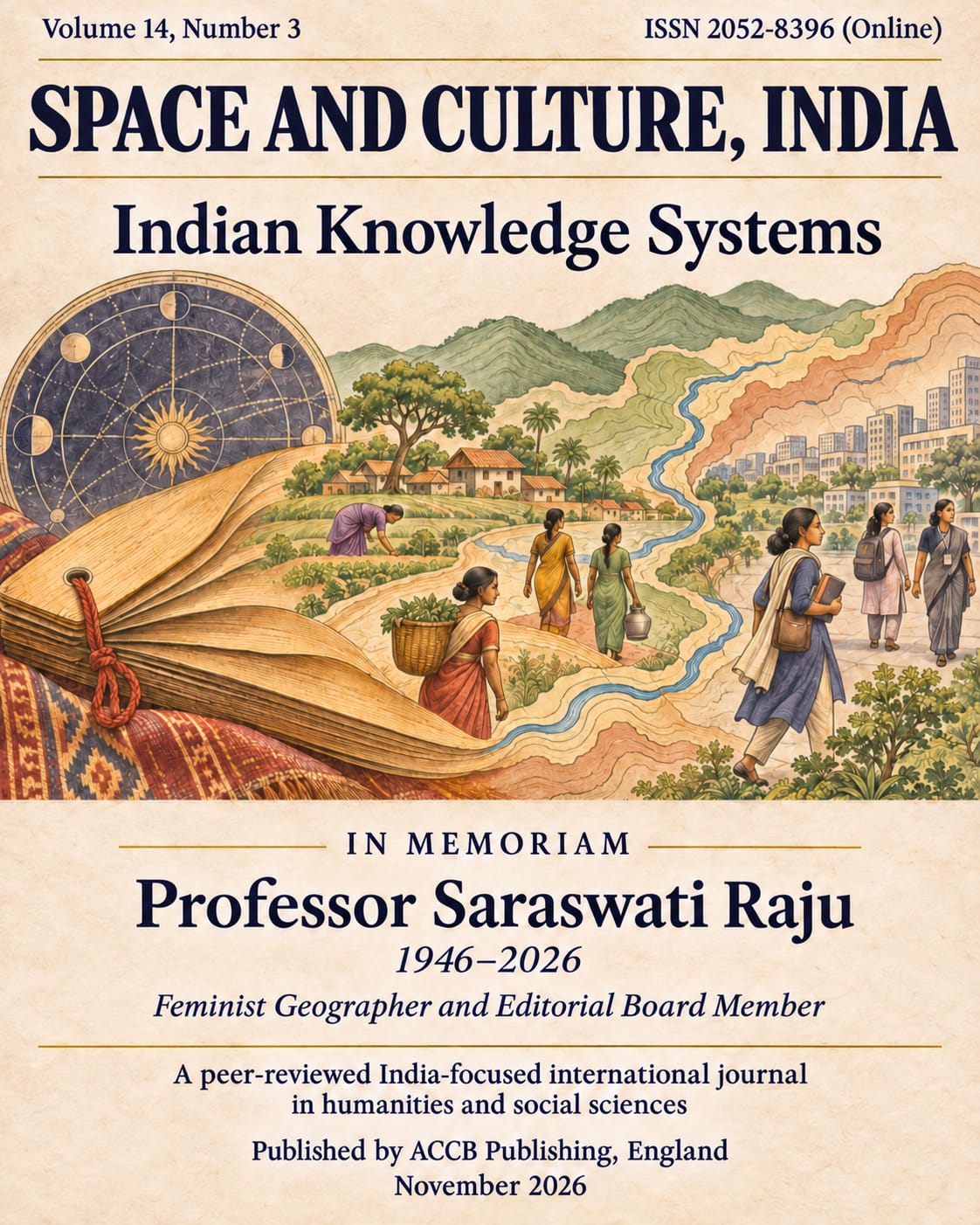
Abstract
The death of Assamese cultural icon Zubeen Garg in Singapore on 19 September 2025 generated extraordinary public mourning, followed by criminal allegations, an investigation in Assam and sustained demands for justice. An earlier commentary published in Space and Culture, India examined the initial progression from collective shock to suspicion, mobilisation and institutional pressure. One year later, the continuing controversy offers an opportunity to examine a different phenomenon: the consolidation of public belief into an expectation of a particular judicial outcome. This perspective considers how concerns about failures of care may develop into allegations of intentional wrongdoing; how proximity to a celebrated figure becomes both a source of symbolic authority and a basis for blame; and how digitally amplified certainty can impose reputational costs on those expressing doubt. It examines the predicament of political executives expected simultaneously to reassure an aggrieved public and respect the independence of criminal proceedings. The article also considers the distinction between prejudicial publicity in jury-based and judge-led criminal justice systems, the Indian legal framework governing trial by media, and the possibility that procedural fairness within the courtroom may coexist with collective prejudgment outside it. Particular attention is given to the conflation of prosecutorial competence with the achievement of conviction and to the responsibilities of the media and public intellectuals in sustaining informed disagreement. Drawing on documented developments, public discourse and established social-psychological concepts, the article advances an interpretive argument rather than a determination of criminal responsibility. It suggests that the challenge extends beyond effective government communication to the preservation of independent judgment within an emotionally mobilised public sphere. A brief historical comparison with the judicial proceedings following Indira Gandhi’s assassination illustrates the distinction between collective anger and the proof of individual culpability.
Keywords
Zubeen Garg, Collective Grief, Public Opinion, Epistemic Conformity, Criminal Justice, Trial by Media, Presumption of Innocence, Digital Mobilisation, Assam, India
Author Biography
Jayanta Biswa Sarma
Dr Jayanta Biswa Sarma is a Consultant Microbiologist at Mid Yorkshire Teaching NHS Trust, UK, with over two decades of experience in the NHS and previous consultant appointments in the Republic of Ireland. A graduate of Gauhati Medical College, he holds a PhD from Gauhati University and postgraduate qualifications in microbiology, genomics, infection control and medical education. A Fellow of the Royal College of Pathologists, his research interests include antimicrobial resistance, healthcare-associated infections and diagnostic stewardship, with contributions to landmark research on NDM-1.
Beyond medicine, Dr Sarma is an author of seven books, including essays, translations and collected editorials. He writes regularly on society, culture and public affairs for India Today NE and Substack. He has contributed to Assamese literary and diaspora initiatives, including the Global Assamese Conference 2026, and is a founding figure and Chairperson of the Assam Healthcare Cooperative Society Ltd. His wider interests encompass healthcare, ethics, public discourse and Assam's intellectual and cultural life.
References
- Asch, S. E. (1956). Studies of independence and conformity: I. A minority of one against a unanimous majority. Psychological Monographs: General and Applied, 70(9), 1–70. https://doi.org/10.1037/h0093718
- Bar & Bench. (2026, 13 October). Gauhati High Court grants bail to accused in Zubeen Garg murder case. https://www.barandbench.com/news/litigation/gauhati-high-court-grants-bail-to-accused-in-zubeen-garg-murder-case
- Bhattacharyya, R. (2024). Understanding xenophobia and genocide. In Bhattacharyya, Rituparna (Ed.), Genocides and xenophobia in South Asia and beyond: A transdisciplinary perspective on known, lesser-known and unknown crime of Crimes (pp. 1–32). Routledge, Taylor & Francis.
- Contempt of Courts Act, 1971 (India), particularly Sections 2(c), 3 and 13. https://indiankanoon.org/doc/1396751/
- Festinger, L. (1957). A Theory of Cognitive Dissonance. Stanford University Press.
- Gauhati High Court. (2026, 26 June). Siddharth Sharma v. State of Assam, Bail Application No. 1453/2026, 2026:GAU-AS:9372. https://indiankanoon.org/doc/195820438/
- India Today (2022, 08 February). ‘Agar Congress na hoti…’: PM Modi’s Big Attack
- on Emergency, Anti-Sikh Riots in Parliament. https://www.indiatoday.in/india/
- story/pm-modi-attack-congress-on-emergency-anti-sikh-riots-parliament-1910231-
- 2022-02-08
- Indian Express. (2025, 20 September). CID to probe Zubeen Garg's death after complaint names his manager, Singapore festival organiser. https://indianexpress.com/article/india/cid-to-probe-zubeen-gargs-death-after-complaint-names-manager-singapore-festival-organiser-10261039/
- Janis, I. L. (1982). Groupthink: Psychological Studies of Policy Decisions and Fiascoes (2nd ed.). Houghton Mifflin.
- Kehar Singh v. State (Delhi Administration), (1988) 3 SCC 609 (Supreme Court of India, 3 August 1988).https://indiankanoon.org/doc/667073/
- Kunda, Z. (1990). The case for motivated reasoning. Psychological Bulletin, 108(3), 480–498. https://doi.org/10.1037/0033-2909.108.3.480
- Law Commission of India. (2006). 200th Report: Trial by Media—Free Speech and Fair Trial under Criminal Procedure Code, 1973.https://indiankanoon.org/doc/42810882/
- Noelle-Neumann, E. (1974). The spiral of silence: A theory of public opinion. Journal of Communication, 24(2), 43–51. https://doi.org/10.1111/j.1460-2466.1974.tb00367.x
- Republic World (2022, 08 February). ‘Agar Congress Na Hoti…’: PM Modi Reminds
- Cong Of Sikh Genocide, Pandits Exodus, Emergency & More. YouTube. https://www.youtube.com/watch?v=_RW_2WpU-GM
- Sahara India Real Estate Corporation Ltd. v. Securities and Exchange Board of India, (2012) 10 SCC 603. Supreme Court of India. https://indiankanoon.org/doc/158887669/
- Sarma, J. B. (2025). When emotion becomes evidence: How Zubeen Garg's case spiralled into a narrative war. Space and Culture, India, 13(3), 8–15. https://doi.org/10.20896/memcq968
- Sidhartha Vashisht alias Manu Sharma v. State (NCT of Delhi), (2010) 6 SCC 1. Supreme Court of India. https://indiankanoon.org/doc/1035023/
- Singapore Police Force. (2025, 17 October). Statement on investigations into Mr Zubeen Garg’s Death. police.gov.sg. https://www.police.gov.sg/Media-Hub/News/2025/10/20251017_statement_by_the_singapore_police_force_on_investigations_into_mr_zubeen_garg_death
- Sunstein, C. R. (2002). The law of group polarization. Journal of Political Philosophy, 10(2), 175–195. https://doi.org/10.1111/1467-9760.00148
- Tieri, Silvia (2024). Communal Riot, Pogrom, or Genocide? Framing and Naming the Anti-Sikh Violence of Delhi 1984. Bhattacharyya, Rituparna (eds). Genocides and Xenophobia in South Asia and Beyond: A Transdisciplinary Perspective on Known, Lesser-known and Unknown Crime of Crimes (pp.124–143). New York and London: Routledge, Taylor and Francis. DOI: 10.4324/9781003205470-6
- The New Indian Express. (2026, 16 October). Gauhati HC grants bail to suspended Assam DSP in Zubeen Garg death case. https://www.newindianexpress.com/states/assam/2026/Oct/16/gauhati-hc-grants-bail-to-suspended-assam-dsp-in-zubeen-garg-death-case-2